The 2026 Guide to Plant-Based Eating: 7 Budget-Friendly Meal Plans for Busy U.S. Families
In an era where health consciousness and environmental responsibility are at the forefront, more and more U.S. families are exploring the benefits of plant-based eating. However, a common misconception is that adopting a plant-based diet is inherently expensive, especially for busy families balancing budgets and demanding schedules. This couldn’t be further from the truth! With smart planning, strategic shopping, and a few clever cooking hacks, enjoying delicious, nutritious, and budget plant-based meals is not only possible but also incredibly rewarding. This comprehensive guide for 2026 will equip you with the knowledge and tools to embrace plant-based living without breaking the bank, offering seven unique, budget-friendly meal plans designed specifically for the dynamic needs of U.S. families.
Anúncios
The landscape of food prices and availability is constantly evolving, but the core principles of affordable plant-based eating remain constant. We’ll delve into how to maximize your grocery dollar, leverage seasonal produce, and transform humble ingredients into culinary masterpieces. Whether you’re a seasoned vegan, a curious flexitarian, or just looking to incorporate more plants into your family’s diet, this guide will provide actionable strategies and inspiring meal plans to make your plant-based journey both sustainable and enjoyable. Let’s redefine what it means to eat well on a budget in 2026.
Anúncios
Understanding the Benefits of Budget Plant-Based Meals
Before diving into the meal plans, let’s briefly recap why embracing budget plant-based meals is such a powerful choice for U.S. families in 2026. Beyond the ethical and environmental considerations, a well-planned plant-based diet offers significant health advantages. Studies consistently show that individuals who consume more plant-based foods tend to have lower risks of heart disease, type 2 diabetes, certain cancers, and obesity. They often experience improved digestion, increased energy levels, and better weight management. And when done affordably, these benefits don’t come with a hefty price tag.
Economically, shifting towards plants can be a game-changer for your household budget. Meat and dairy products are often the most expensive items on a grocery list. By reducing or eliminating these, and focusing on staples like legumes, grains, seasonal vegetables, and fruits, families can realize substantial savings. Furthermore, cooking at home with whole ingredients, a cornerstone of budget plant-based meals, almost always costs less than eating out or relying on processed convenience foods. This empowers families to take control of their food spending and allocate resources to other important areas.
The environmental impact is another compelling reason. Plant-based diets generally require fewer natural resources, including land and water, and produce fewer greenhouse gas emissions compared to diets rich in animal products. By choosing budget plant-based meals, your family contributes to a more sustainable food system, leaving a healthier planet for future generations. It’s a win-win-win: good for your health, good for your wallet, and good for the Earth.
Key Strategies for Affordable Plant-Based Eating in 2026
To successfully implement budget plant-based meals, it’s crucial to adopt several core strategies. These principles will form the foundation of our meal plans and empower you to adapt them to your family’s unique preferences and local market conditions.
1. Embrace Whole Grains and Legumes as Staples
Lentils, beans (black, pinto, chickpeas, kidney), rice (brown, white, wild), oats, quinoa, and pasta are your best friends. These are incredibly versatile, nutrient-dense, and remarkably inexpensive, forming the backbone of countless budget plant-based meals. Buy them in bulk when possible to save even more. A large bag of dried beans, for instance, can provide many meals for a fraction of the cost of canned varieties, though canned beans are excellent for convenience.
2. Prioritize Seasonal and Frozen Produce
Eating with the seasons is one of the smartest ways to save money on fruits and vegetables. Seasonal produce is typically more abundant, fresher, and therefore cheaper. Farmer’s markets can be a great place to find deals. Don’t overlook frozen fruits and vegetables either. They are often picked at their peak ripeness and flash-frozen, locking in nutrients and flavor, and are available year-round at competitive prices. They are perfect for smoothies, stir-fries, and stews.
3. Master Meal Planning and Batch Cooking
This is arguably the most critical strategy for budget plant-based meals. Spending a little time each week planning your meals and grocery list prevents impulse buys and food waste. Batch cooking involves preparing large quantities of staple ingredients (like cooked grains, roasted vegetables, or a big pot of chili) that can be used in various meals throughout the week. This saves time, energy, and money.
4. Cook from Scratch and Limit Processed Foods
While convenient, most plant-based processed foods (like meat substitutes, fancy vegan cheeses, and pre-made meals) can be quite expensive. Focus on whole, unprocessed ingredients. Cooking from scratch allows you to control ingredients, flavor, and cost. It’s also an excellent way to introduce your family to new skills and foster a healthier relationship with food.
5. Utilize Herbs, Spices, and Pantry Staples
A well-stocked pantry of herbs, spices, vinegars, oils, and other condiments can elevate simple budget plant-based meals into gourmet experiences. These items are relatively inexpensive and last a long time, providing immense flavor without adding significant cost. Don’t forget nutritional yeast for a cheesy flavor and soy sauce or tamari for umami depth.
6. Reduce Food Waste
Food waste is money wasted. Plan meals carefully, store food properly, and get creative with leftovers. Vegetable scraps can become stock, overripe fruit can be blended into smoothies, and leftover grains can be transformed into breakfast bowls or veggie burgers. Composting any unavoidable waste further contributes to sustainability.
7 Budget-Friendly Plant-Based Meal Plans for U.S. Families (2026)
Here are seven distinct meal plans, each designed with a specific focus to help U.S. families enjoy budget plant-based meals throughout the week. Remember to adjust portion sizes and ingredient quantities based on your family’s needs.
Meal Plan 1: The Legume Powerhouse Week
This plan centers around the incredible versatility and affordability of legumes. Beans and lentils are packed with protein, fiber, and essential nutrients, making them perfect for budget plant-based meals.
- Monday: Lentil Soup with whole-wheat bread. (Cook a large batch of lentils)
- Tuesday: Black Bean Burgers on whole-wheat buns with a side salad. (Use leftover cooked black beans from Monday’s batch prep)
- Wednesday: Chickpea and Spinach Curry with brown rice.
- Thursday: White Bean and Vegetable Chili.
- Friday: Quick Kidney Bean and Corn Tostadas with avocado slices.
- Saturday: Hearty Bean and Veggie Burritos.
- Sunday: Leftover chili or curry, or a simple pasta with a lentil-based marinara sauce.
Shopping Tip: Buy dried lentils and a variety of dried beans in bulk. Soak and cook them in advance for convenience.
Meal Plan 2: Global Flavors on a Dime
Explore international cuisine without the international price tag. Many global dishes are naturally plant-based and rely on inexpensive staples like rice, noodles, and vegetables.
- Monday: Tofu Scramble with sautéed vegetables for breakfast, Leftover Tofu Scramble in a wrap for lunch, Vegetable Lo Mein for dinner.
- Tuesday: Oatmeal with fruit, Peanut Noodles with edamame, Red Lentil Dal with rice and a side of steamed greens.
- Wednesday: Smoothie, Leftover Dal, Black Bean and Corn Salsa with tortilla chips.
- Thursday: Toast with avocado, Hummus and veggie pita, Sweet Potato and Black Bean Enchiladas.
- Friday: Cereal with plant milk, Leftover Enchiladas, Homemade Veggie Pizza (using inexpensive toppings like mushrooms, bell peppers, onions).
- Saturday: Pancakes with fruit, Tofu Bánh Mì sandwiches, Big batch of Minestrone Soup.
- Sunday: Tofu scramble, Leftover Minestrone Soup, Simple pasta with tomato sauce and nutritional yeast.
Shopping Tip: Stock up on international spices, soy sauce, rice vinegar, and peanut butter to create authentic flavors.
Meal Plan 3: The Batch Cooking Champion
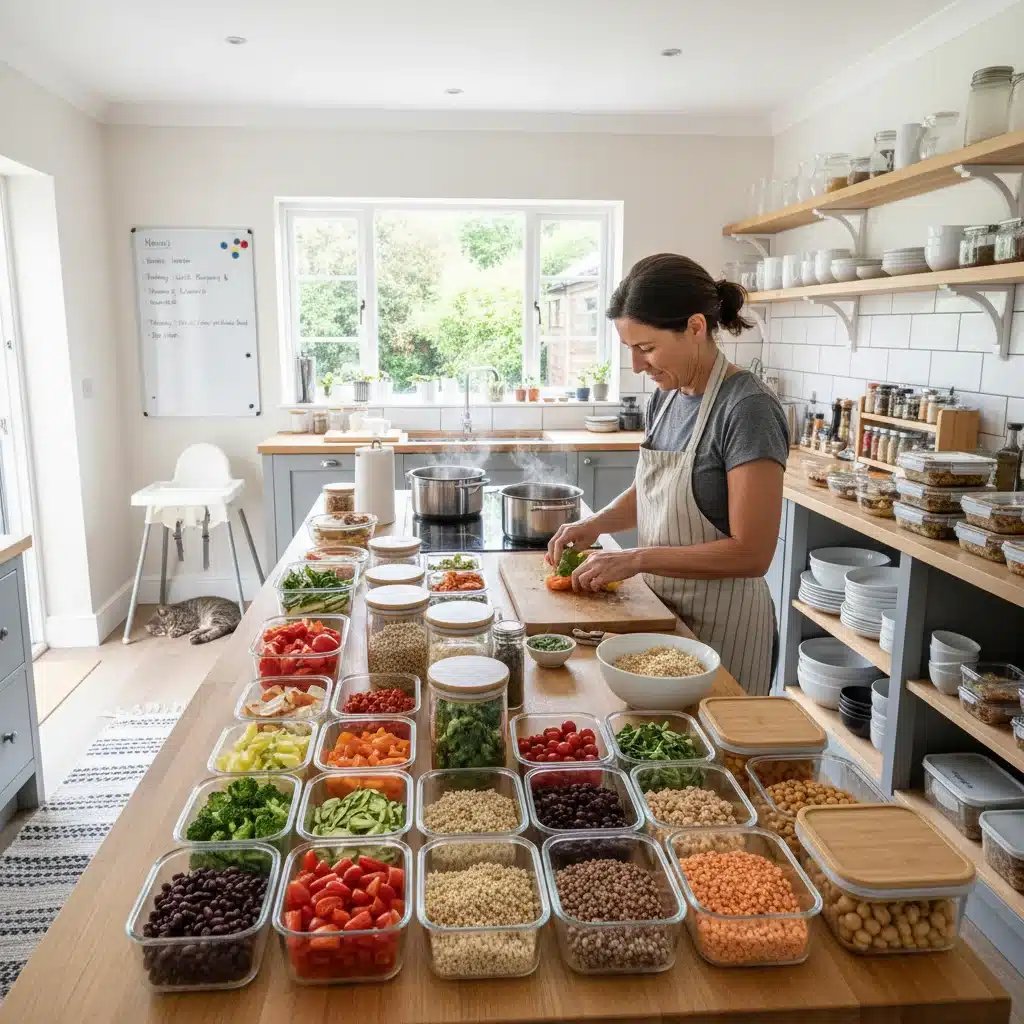
Designed for busy families, this plan maximizes efficiency through strategic batch cooking. Prepare core ingredients once, then assemble diverse budget plant-based meals throughout the week.
Batch Prep Day (Sunday):
- Cook a large pot of quinoa or brown rice.
- Roast a big tray of mixed vegetables (broccoli, carrots, sweet potatoes, bell peppers).
- Cook a large batch of chickpeas or black beans.
- Prepare a big pot of lentil soup or chili.
Weekly Meals:
- Monday: Quinoa bowls with roasted veggies, chickpeas, and a simple tahini dressing.
- Tuesday: Chickpea ‘tuna’ salad sandwiches (made with mashed chickpeas) with a side of raw veggies.
- Wednesday: Lentil soup with a side of whole-wheat bread.
- Thursday: Black bean and roasted veggie tacos.
- Friday: Quick stir-fry with leftover roasted veggies, rice, and tofu/tempeh (if budget allows, otherwise more beans!).
- Saturday: DIY veggie pizzas using pre-made crusts and pantry staples.
- Sunday: Leftover lentil soup or a simple pasta dish.
Shopping Tip: Focus on bulk purchases for grains and legumes. Buy versatile vegetables that can be roasted or used fresh.
Meal Plan 4: Pantry Power & Frozen Finds
This plan proves that you can create fantastic budget plant-based meals primarily from your pantry and freezer, minimizing trips to the grocery store.
- Monday: Hearty Oatmeal with frozen berries and nuts.
- Tuesday: Canned Black Bean and Corn Salad with rice.
- Wednesday: Pasta with a simple tomato sauce (from canned tomatoes) and frozen spinach.
- Thursday: Lentil Shepherd’s Pie (using canned lentils and frozen mixed vegetables, topped with mashed potatoes).
- Friday: Quick Chickpea ‘tuna’ melt using canned chickpeas and dairy-free cheese slices (if budget allows).
- Saturday: Homemade Veggie Burgers (from canned beans and oats) with frozen fries.
- Sunday: Leftover Shepherd’s Pie or a big pot of vegetable soup made from frozen veggies and pantry staples.
Shopping Tip: Keep your pantry stocked with canned beans, tomatoes, pasta, rice, and a variety of frozen fruits and vegetables.
Meal Plan 5: The Seasonal Produce Saver
Harness the power of seasonal produce to create fresh, vibrant, and budget plant-based meals. This plan will vary depending on your location and the time of year, but the principles remain the same.
Example for Spring/Early Summer:
- Monday: Asparagus and Pea Pasta with lemon-garlic sauce.
- Tuesday: Strawberry Spinach Salad with candied pecans and a light vinaigrette.
- Wednesday: Fresh Artichoke and White Bean Dip with crudités and pita.
- Thursday: Spring Vegetable and Tofu Skewers (using seasonal bell peppers, zucchini, onions).
- Friday: Rhubarb Crumble for dessert, followed by a light soup.
- Saturday: Farmers Market Haul: Create a big veggie and grain bowl with whatever fresh, inexpensive produce you find.
- Sunday: Leftovers or a simple stir-fry with any remaining seasonal vegetables.
Shopping Tip: Visit local farmer’s markets or check online guides for what’s in season in your area. This is where you’ll find the best deals on fresh produce.
Meal Plan 6: Kid-Friendly & Frugal
Getting kids on board with budget plant-based meals can be a challenge, but this plan focuses on familiar, fun, and affordable dishes that even picky eaters will love.
- Monday: Vegan Mac and Cheese (made with nutritional yeast and cashews/potatoes) with steamed broccoli.
- Tuesday: “Chicken” Nugget (chickpea or tofu based) and Sweet Potato Fries.
- Wednesday: Mini Pizzas on pita bread with veggie toppings.
- Thursday: Peanut Butter and Jelly Sandwiches (on whole wheat) with carrot sticks and hummus.
- Friday: Veggie Hot Dogs (store-bought or homemade carrot dogs) with baked beans.
- Saturday: Build-Your-Own Taco Bar (black beans, corn, lettuce, tomatoes, salsa, avocado if budget allows).
- Sunday: Pancakes or Waffles with fresh fruit, followed by leftovers for dinner.
Shopping Tip: Look for deals on whole-wheat pasta, plant milks, and frozen fruit for smoothies.
Meal Plan 7: High-Protein & Low-Cost
Dispelling the myth that plant-based protein is expensive, this plan highlights nutrient-dense, affordable protein sources for budget plant-based meals.
- Monday: Lentil and Mushroom Loaf with mashed potatoes and gravy.
- Tuesday: High-Protein Pasta (chickpea or lentil pasta) with a rich marinara sauce and fortified nutritional yeast.
- Wednesday: Tofu Scramble with black beans and whole-wheat tortillas.
- Thursday: Edamame and Vegetable Stir-fry with brown rice.
- Friday: Tempeh (or extra firm tofu) Chili with cornbread.
- Saturday: Giant Protein Salad: Mixed greens, chickpeas, kidney beans, quinoa, sunflower seeds, and a hearty dressing.
- Sunday: Leftover chili or a big bowl of lentil soup.
Shopping Tip: Focus on bulk purchases of lentils, beans, and whole grains. Tofu and tempeh are also very affordable protein sources when bought in larger blocks.
Beyond the Meal Plans: Advanced Tips for Saving Money
While the meal plans provide a solid framework for budget plant-based meals, incorporating these additional tips will supercharge your savings and make plant-based eating even more accessible.
Grow Your Own Herbs and Some Vegetables
Even a small herb garden on a windowsill can save you money on fresh herbs, which can be surprisingly pricey. If you have outdoor space, consider growing easy vegetables like lettuce, radishes, tomatoes, or zucchini. The initial investment is minimal, and the rewards are fresh, organic produce right at your fingertips.
Make Your Own Staples
Many common plant-based ingredients are much cheaper to make at home. Think hummus (from dried chickpeas), plant milks (oat milk is incredibly simple and cheap to make), vegetable broth (from scraps), and even bread. While it requires a bit more time, the cost savings are substantial, and the taste is often superior.
Shop at Discount Stores and Ethnic Markets
Don’t limit your grocery shopping to just one supermarket. Discount grocery stores often have great deals on produce and pantry staples. Ethnic markets can be treasure troves for inexpensive bulk grains, legumes, spices, and unique seasonal vegetables that are often cheaper than mainstream stores.
Utilize Sales and Coupons
Keep an eye on weekly sales flyers and digital coupons. Stock up on non-perishable items like canned goods, pasta, and frozen vegetables when they are on sale. This requires a bit of foresight but can lead to significant long-term savings.
Reduce Meat & Dairy Gradually (If Not Fully Plant-Based Yet)
If your family isn’t fully plant-based, start by incorporating more budget plant-based meals gradually. Participate in ‘Meatless Mondays’ or challenge yourselves to one plant-based meal a day. Every step towards eating more plants contributes to your health, your budget, and the planet.
Get the Family Involved
Involving children in meal planning, grocery shopping, and cooking can foster a greater appreciation for food and reduce resistance to new dishes. When kids help prepare budget plant-based meals, they are often more excited to eat them.
Addressing Common Concerns about Budget Plant-Based Meals
It’s natural to have questions when transitioning to a new way of eating. Here are answers to some common concerns about budget plant-based meals for U.S. families:
“Will my kids get enough protein?”
Absolutely! Plant-based foods are rich in protein. Legumes, whole grains, nuts, seeds, and even many vegetables contain ample protein. As long as your family is eating a varied diet and sufficient calories, protein deficiency is highly unlikely. Focus on incorporating a variety of protein sources throughout the day, as highlighted in our meal plans.
“What about essential nutrients like B12, Iron, and Calcium?”
These nutrients require a bit more attention but are easily managed. Vitamin B12 is the only vitamin that is not reliably found in plant foods and should be supplemented or obtained through fortified foods (like plant milks, cereals, and nutritional yeast). Iron can be found in lentils, beans, spinach, fortified cereals, and dark chocolate; pairing iron-rich foods with Vitamin C (e.g., bell peppers, citrus) enhances absorption. Calcium is abundant in fortified plant milks, tofu, leafy greens, and sesame seeds.
“Isn’t it boring to eat just beans and rice?”
Not at all! Our meal plans demonstrate the incredible diversity possible with budget plant-based meals. With a wide array of spices, herbs, vegetables, and cooking techniques, beans and rice can be transformed into countless exciting dishes – from Mexican burritos to Indian dals, Mediterranean bowls, and Caribbean stews. The key is creativity and embracing new flavors.
“I don’t have time to cook from scratch every day.”
This is where batch cooking and strategic meal prep become invaluable. Dedicate a few hours on a weekend to prepare foundational ingredients (cooked grains, chopped veggies, cooked beans) that can be quickly assembled into different meals during the week. Many budget plant-based meals are also quick to prepare, like simple pasta dishes, stir-fries, or loaded baked potatoes.
Conclusion: Thriving on Budget Plant-Based Meals in 2026
Embracing budget plant-based meals is not just a trend; it’s a sustainable, healthy, and economically sound lifestyle choice for U.S. families in 2026. By focusing on whole, unprocessed ingredients, leveraging seasonal and frozen produce, and mastering the art of meal planning and batch cooking, you can nourish your family with delicious, diverse, and affordable plant-based dishes.
The seven meal plans provided in this guide offer a springboard for your culinary adventures. Feel free to mix and match, adapt recipes to your family’s tastes, and experiment with new ingredients. Remember, every plant-based meal you choose contributes to a healthier you, a healthier wallet, and a healthier planet. Start your journey today and discover the incredible abundance and joy of budget plant-based meals!