Parental Leave 2026: Navigating Policy Shifts Across US Industries

Anúncios
The landscape of work-life balance and employee benefits in the United States is in a constant state of evolution, with parental leave policies often at the forefront of these discussions. As we approach 2026, significant shifts are anticipated, driven by a combination of changing societal expectations, legislative efforts, and competitive pressures within various industries. Understanding these upcoming changes, particularly concerning parental leave 2026, is not just beneficial but crucial for businesses and employees alike.
Parental leave, encompassing maternity, paternity, and adoption leave, is a cornerstone of family-friendly workplaces. It allows new parents to bond with their children, recover from childbirth, and adjust to new family dynamics without the immediate pressure of returning to work. Historically, the U.S. has lagged behind many other developed nations in offering comprehensive paid parental leave. However, recent years have seen a growing momentum towards more robust and equitable policies.
Anúncios
This comprehensive guide aims to dissect the projected changes in parental leave 2026 across 12 diverse U.S. industries. We will explore the driving forces behind these shifts, the legal and economic implications, and offer actionable insights for organizations to navigate this evolving terrain successfully. From technology to manufacturing, healthcare to retail, the impact of these policy adjustments will be far-reaching, demanding proactive planning and adaptation.
Anúncios
The Evolving Landscape of Parental Leave in the U.S.
Before delving into industry-specific details, it’s essential to grasp the broader context of parental leave in the U.S. The Family and Medical Leave Act (FMLA) of 1993 remains the federal benchmark, providing up to 12 weeks of unpaid, job-protected leave for certain family and medical reasons, including the birth or adoption of a child. However, FMLA’s limitations – its unpaid nature and coverage restrictions – have fueled calls for more comprehensive solutions.
In recent years, several states and municipalities have enacted their own paid family leave (PFL) programs, setting a precedent and influencing national dialogue. These state-level initiatives often provide partial wage replacement for a specified period, offering a vital safety net for new parents. The patchwork nature of these laws, however, creates complexities for multi-state employers, making a unified federal approach increasingly desirable for some.
Beyond legislation, market forces are also at play. Companies are increasingly recognizing that generous parental leave policies are not just a moral imperative but a strategic business advantage. They contribute to higher employee morale, reduced turnover, improved recruitment, and enhanced brand reputation. As the competition for top talent intensifies, especially in knowledge-based industries, attractive benefits packages that include robust parental leave are becoming non-negotiable.
Key Drivers Shaping Parental Leave Policies for 2026
Several significant factors are converging to reshape parental leave 2026 policies:
-
Changing Demographics and Workforce Expectations:
The modern workforce is diverse, with a growing number of dual-income households and single parents. Younger generations, particularly Millennials and Gen Z, prioritize work-life balance and family-friendly benefits more than previous generations. They expect employers to support their personal and family lives, and parental leave is a critical component of that support.
-
Economic Benefits and Productivity:
Research consistently demonstrates that paid parental leave can lead to improved employee retention, reduced recruitment and training costs, and increased productivity upon an employee’s return. It also contributes to gender equity in the workplace by enabling both parents to participate equally in childcare and career progression.
-
Legislative Momentum at State and Federal Levels:
While federal paid family leave legislation has faced hurdles, the conversation continues to gain traction. State-level successes in implementing PFL programs provide models and build pressure for broader federal action. Even without a federal mandate, the sheer number of states adopting PFL is creating a de facto national standard that many employers will need to consider.
-
Corporate Social Responsibility (CSR) and ESG Factors:
Companies are increasingly evaluated not just on their financial performance but also on their environmental, social, and governance (ESG) practices. Strong parental leave policies are a clear indicator of a company’s commitment to social responsibility and employee well-being, enhancing its appeal to investors, consumers, and prospective employees.
-
Global Comparisons and Competitiveness:
The U.S. remains an outlier among developed nations in its lack of a federal paid parental leave mandate. This global perspective puts pressure on U.S. companies to align their policies with international best practices, especially those operating on a global scale.
Understanding the Legal Framework for 2026
Navigating the legal intricacies of parental leave is paramount. While FMLA provides a baseline, state and local laws often offer more generous provisions. Employers must be diligent in understanding and complying with all applicable regulations. For parental leave 2026, we anticipate:
-
Expansion of State Paid Family Leave Programs:
More states are likely to enact or expand their PFL programs, increasing the geographical coverage of paid leave benefits. This will necessitate employers keeping abreast of new legislation in every state where they operate.
-
Increased Scrutiny of Existing Policies:
Regulators and advocacy groups will continue to scrutinize existing company policies to ensure compliance and fairness. This includes ensuring non-discriminatory application of leave benefits to all parents, regardless of gender or family structure.
-
Potential for Federal Movement:
While not guaranteed, the ongoing discussions around a federal paid family and medical leave program could gain significant momentum by 2026. Even if a comprehensive federal law isn’t passed, there might be incremental changes or incentives for employers to offer paid leave.
-
Interplay Between Federal, State, and Local Laws:
Employers will continue to face the challenge of reconciling overlapping and sometimes conflicting federal, state, and local laws. The most generous provision typically applies, requiring careful analysis and policy design.

Industry-Specific Outlook for Parental Leave 2026
The impact and adoption of enhanced parental leave policies will vary significantly across industries, influenced by factors such as workforce demographics, labor market competitiveness, regulatory environment, and financial capacity.
1. Technology Sector
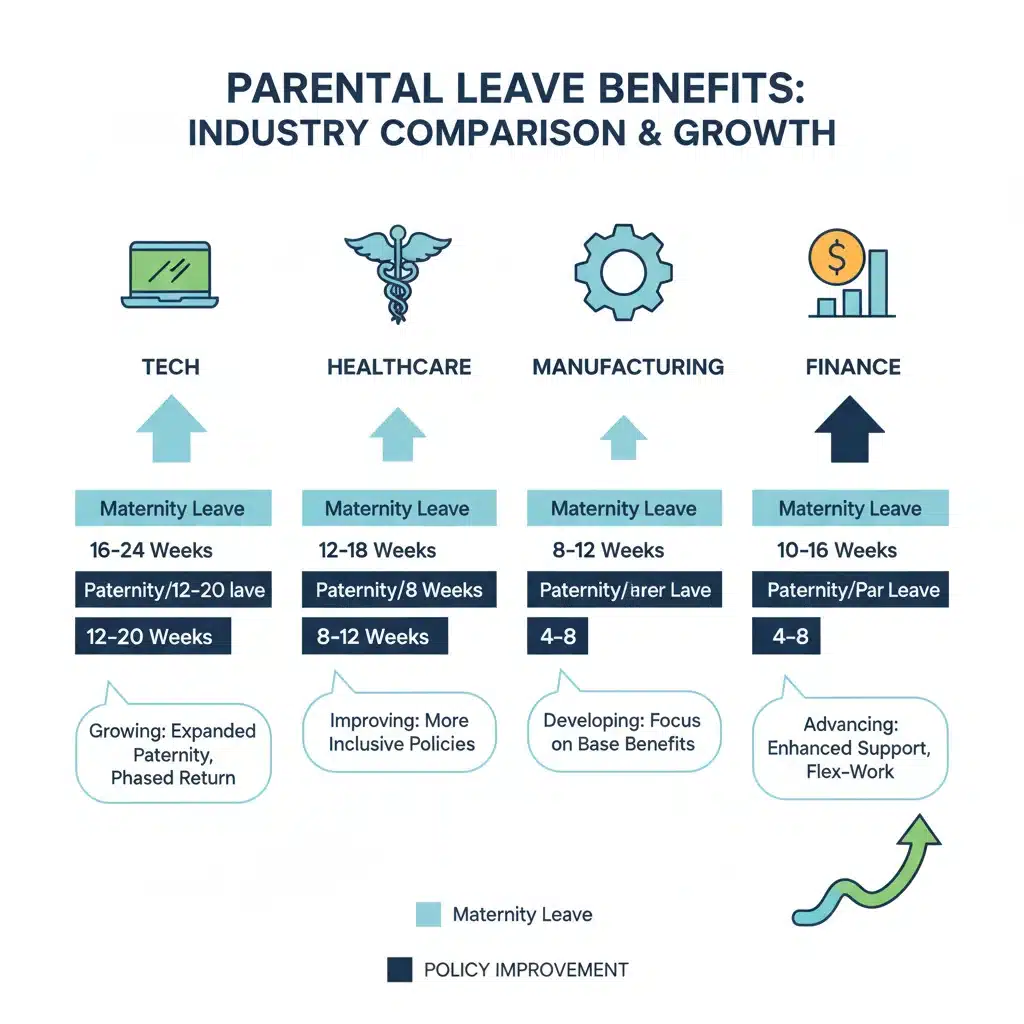
The tech industry has historically led the way in offering generous parental leave benefits, driven by intense competition for talent and a culture that often prioritizes employee well-being. For parental leave 2026, expect continued innovation and expansion, with companies potentially offering longer paid leave periods (e.g., 20+ weeks), enhanced support for adoptive and foster parents, and flexible return-to-work programs. The emphasis will be on highly competitive packages to attract and retain skilled professionals.
2. Healthcare
The healthcare sector, with its high-stress environment and predominantly female workforce, is under increasing pressure to improve parental leave. While some large hospital systems already offer robust benefits, smaller practices and care facilities may lag. By 2026, expect a broader adoption of paid leave policies, driven by state mandates and the need to retain nurses, doctors, and allied health professionals. Focus will also be on supporting shift workers and those with demanding schedules.
3. Financial Services
Similar to tech, financial services firms are vying for top talent and often offer competitive parental leave. For parental leave 2026, the trend will likely be towards standardizing and expanding paid leave across all levels, moving beyond executive perks. There will also be a focus on promoting paternity leave to encourage greater gender equity in a traditionally male-dominated industry.
4. Manufacturing
The manufacturing sector, often characterized by hourly wages and a diverse workforce, faces unique challenges. While some larger manufacturers offer paid leave, many smaller operations do not. State-level mandates will be a primary driver for change here. By 2026, expect increased compliance with state PFL laws and a growing recognition among employers of the benefits of offering paid leave to reduce turnover and improve morale among production staff.
5. Retail and Hospitality
These sectors, known for high turnover and often lower wages, have historically offered minimal parental leave beyond FMLA. However, as the labor market tightens and employee expectations rise, even these industries are feeling the pressure. For parental leave 2026, expect more large retail chains and hotel groups to introduce or enhance paid parental leave, often in response to public pressure or to gain a competitive edge in hiring. The challenge will be for smaller businesses to adapt.
6. Education (K-12 and Higher Ed)
Parental leave in education varies widely between public and private institutions and by state. Public school districts often rely on collective bargaining agreements. By 2026, expect continued advocacy from educators’ unions for more comprehensive paid parental leave. Universities, particularly private ones, will likely enhance their offerings to remain competitive in attracting faculty and staff.
7. Government (Federal, State, Local)
The federal government already provides paid parental leave to its employees. State and local government policies vary considerably. For parental leave 2026, the trend will be towards more state and local governments adopting paid leave for their employees, often mirroring or exceeding private sector benefits to attract and retain public servants.
8. Professional Services (Consulting, Legal, Accounting)
These client-focused industries often demand long hours, making work-life balance a critical concern. Many large firms already offer strong parental leave. By 2026, expect a refinement of policies, including greater flexibility in leave duration, phased return-to-work options, and enhanced support for partners of new parents, to retain highly skilled professionals.
9. Non-Profit Sector
Non-profits often operate with tighter budgets, making generous benefits challenging. However, their mission-driven nature often attracts employees who value work-life balance. For parental leave 2026, expect an increased push for paid leave, often through grant funding, state programs, or partnerships, to align with their values and remain competitive in the talent market.
10. Construction
The construction industry, traditionally male-dominated and project-based, is beginning to see shifts. As the workforce diversifies and the industry seeks to attract new talent, parental leave will become a more significant consideration. By 2026, expect more progressive construction firms to offer paid leave, potentially through union agreements or as part of a broader strategy to improve employee welfare and reduce turnover.
11. Transportation and Logistics
This sector faces unique challenges with schedules and remote work. For parental leave 2026, companies will need to balance operational demands with employee needs. Expect an increase in paid leave offerings, particularly for office-based staff, and creative solutions for drivers and other operational personnel, potentially involving enhanced short-term disability benefits or flexible scheduling upon return.
12. Media and Entertainment
The media and entertainment industries often have a mix of full-time employees and project-based contractors. Large corporations in this space typically offer competitive parental leave. By 2026, expect a focus on extending benefits to a broader range of employees, including those on contract, and adapting policies to the often unpredictable nature of production schedules.
Preparing Your Organization for Parental Leave 2026
Proactive preparation is key to successfully navigating the anticipated changes in parental leave 2026. Here’s how organizations can get ready:
1. Conduct a Comprehensive Policy Review
Begin by auditing your current parental leave policies. Compare them against state and local mandates, industry benchmarks, and the anticipated trends for 2026. Identify gaps and areas for improvement. Consider not just paid leave duration but also eligibility requirements, job protection, and benefit calculations.
2. Stay Informed on Legislative Developments
Designate an HR or legal professional to monitor ongoing legislative discussions at federal, state, and local levels. Membership in industry associations and legal updates can provide invaluable insights into impending changes that will impact parental leave 2026.
3. Budget for Increased Costs (if applicable)
If your organization plans to enhance paid parental leave or anticipates new state mandates, factor these potential costs into your budgeting process. Explore options like private insurance plans for paid family leave or state-run programs to offset the financial burden.
4. Communicate Clearly and Transparently
Once policies are updated, communicate them effectively to all employees. Ensure that guidelines are clear, accessible, and inclusive. Provide training for managers on how to support employees taking and returning from parental leave, fostering a culture of empathy and understanding.
5. Implement Return-to-Work Programs
A successful parental leave policy extends beyond the leave itself. Offer flexible return-to-work options, such as phased returns, part-time schedules, or remote work arrangements, to ease the transition for new parents. Provide resources like lactation rooms, childcare support information, and employee assistance programs.
6. Foster an Inclusive Culture
Promote a culture where all parents – mothers, fathers, adoptive, and foster parents – feel supported in taking leave. Challenge gender stereotypes around childcare responsibilities. Leadership should model appropriate behavior and champion parental leave as a valuable benefit.
7. Leverage Technology and HR Systems
Utilize HR information systems (HRIS) to track leave requests, manage benefits, and ensure compliance. Technology can streamline administrative processes, reduce errors, and provide valuable data for analyzing the effectiveness of your parental leave programs.
8. Benchmark Against Competitors
Regularly assess what your competitors are offering in terms of parental leave. This helps ensure your benefits remain competitive and attractive to prospective and current employees. Understanding industry best practices for parental leave 2026 is essential for talent acquisition and retention.
The Business Case for Progressive Parental Leave
Beyond compliance and employee satisfaction, there’s a strong business case for progressive parental leave policies:
-
Improved Employee Retention:
Employees who feel supported during major life events are more likely to remain with their employer long-term, reducing turnover costs.
-
Enhanced Talent Acquisition:
Generous parental leave is a significant differentiator in a competitive labor market, attracting top-tier talent.
-
Increased Productivity and Engagement:
Employees returning from well-supported leave are often more engaged, focused, and productive.
-
Greater Diversity and Inclusion:
Equitable parental leave policies support gender equality and diverse family structures, fostering a more inclusive workplace.
-
Stronger Brand Reputation:
Companies known for their family-friendly policies enjoy a positive public image, enhancing their employer brand and consumer appeal.
-
Reduced Healthcare Costs:
Studies suggest that paid parental leave can lead to better health outcomes for mothers and babies, potentially reducing long-term healthcare costs for employers.
Challenges and Considerations
While the benefits are clear, implementing or expanding parental leave policies for parental leave 2026 also presents challenges:
-
Cost:
For smaller businesses, the financial burden of paid leave can be significant, especially without state or federal subsidies.
-
Staffing and Coverage:
Managing workflow and ensuring adequate coverage during an employee’s extended absence requires careful planning and potentially temporary staffing solutions.
-
Administrative Complexity:
Navigating the patchwork of federal, state, and local laws can be administratively complex and require dedicated HR resources.
-
Fairness and Equity:
Ensuring that policies are applied equitably across all employee groups and family structures (e.g., same-sex couples, adoptive parents, foster parents) is crucial.
-
Cultural Resistance:
In some organizations, there may be cultural resistance to extended parental leave, particularly for fathers, requiring strong leadership and communication to overcome.
Conclusion
The year 2026 is poised to be a pivotal moment for parental leave policies across U.S. industries. Driven by a confluence of legislative initiatives, evolving workforce expectations, and a growing understanding of the economic benefits, organizations are increasingly recognizing the imperative to offer more comprehensive and equitable parental leave. While challenges exist, the advantages of attracting and retaining talent, fostering a diverse and inclusive workplace, and enhancing overall employee well-being far outweigh the hurdles.
By proactively reviewing existing policies, staying abreast of legal developments, and fostering a supportive workplace culture, businesses can not only comply with anticipated changes but also transform their approach to parental leave 2026 into a strategic asset. The new normal for parental leave promises a more family-friendly and equitable future for the American workforce, benefiting individuals, families, and organizations alike.