FMLA Leave 2025: U.S. Caregiver’s 12-Week Guide
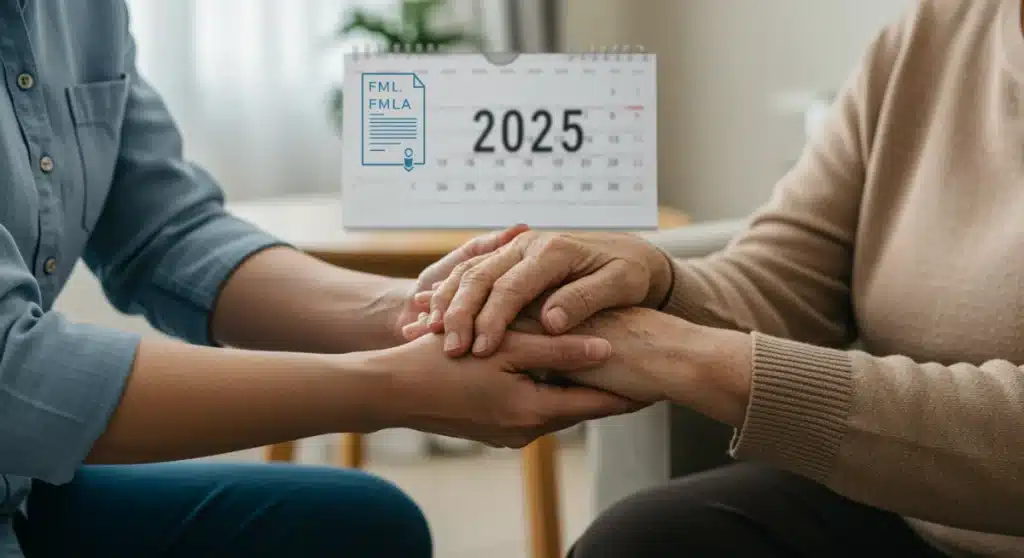
Securing up to 12 weeks of FMLA leave for caregiving in 2025 requires U.S. caregivers to understand eligibility, documentation, and employer communication for a successful application and protected time off.
Navigating the complexities of family leave can be daunting, especially when you’re also managing caregiving responsibilities. For U.S. caregivers looking to understand the process, securing up to 12 weeks of FMLA leave caregiving 2025 is a critical pathway to balance personal and professional duties. This guide offers practical solutions and a clear, step-by-step approach to help you confidently apply for and utilize your Family and Medical Leave Act benefits.
Understanding FMLA: What it Means for Caregivers in 2025
The Family and Medical Leave Act (FMLA) is a federal law that provides eligible employees with up to 12 workweeks of unpaid, job-protected leave per year for specific family and medical reasons. For caregivers, this protection is invaluable, allowing them to tend to serious health conditions of family members without fear of job loss. In 2025, the core tenets of FMLA remain consistent, but staying informed about any potential minor adjustments or interpretations is always wise.
FMLA ensures that you can take necessary time off to care for a spouse, child, or parent with a serious health condition. This includes physical or mental conditions that require inpatient care or continuing treatment by a healthcare provider. The law is designed to provide a safety net, recognizing the vital role caregivers play in their families and communities.
Key FMLA Eligibility Criteria
Before you even consider applying, it’s crucial to determine if you meet the fundamental requirements for FMLA leave. Not all employees or employers are covered, so checking these criteria is your first step. Understanding these points early on can save you time and potential frustration.
- You must work for a covered employer (private-sector employers with 50 or more employees, public agencies, and schools).
- You must have worked for the employer for at least 12 months (not necessarily consecutive).
- You must have worked at least 1,250 hours during the 12 months immediately preceding the leave.
- You must work at a location where the employer has at least 50 employees within 75 miles.
Confirming your eligibility is the bedrock of a successful FMLA application. If you meet these conditions, you’re well-positioned to proceed with your leave request. If not, exploring other employer-specific leave policies or state-level family leave acts might be necessary.
In essence, FMLA provides a critical framework for caregivers to take necessary time off. By understanding the foundational aspects and eligibility requirements, you can approach the application process with greater confidence and clarity, ensuring you can provide the care your family member needs without jeopardizing your employment.
Identifying a ‘Serious Health Condition’ Under FMLA
A cornerstone of FMLA eligibility for caregiving leave hinges on the definition of a ‘serious health condition.’ This isn’t just any illness; it’s a specific classification that dictates whether your family member’s condition qualifies for your protected leave. Understanding this definition is paramount to a successful application.
Generally, a serious health condition involves inpatient care (an overnight stay in a hospital, hospice, or residential medical care facility) or continuing treatment by a healthcare provider. The Department of Labor provides detailed guidance on what constitutes a serious health condition, and it’s important to consult these definitions to ensure your situation aligns.
Examples of Qualifying Conditions
While the specifics can be complex, several types of conditions commonly qualify for FMLA leave. These examples can help you assess if your family member’s situation is likely to be covered.
- Conditions requiring an overnight stay in a medical facility.
- Conditions that incapacitate someone for more than three consecutive calendar days and require ongoing medical treatment.
- Chronic conditions that require periodic treatment by a healthcare provider and result in periods of incapacity.
- Permanent or long-term conditions for which treatment may not be effective.
- Conditions requiring multiple treatments, such as for restorative surgery or for a condition that would result in incapacity if not treated.
It’s important to remember that FMLA focuses on the ‘serious health condition’ of the family member, not necessarily the specific diagnosis itself. The impact and the need for care are what truly matter. Always consult with the healthcare provider to ensure their documentation accurately reflects the serious nature of the condition as defined by FMLA.
Navigating the definition of a ‘serious health condition’ under FMLA can feel intricate, but it’s a vital step. By clearly understanding what qualifies and ensuring proper medical documentation, caregivers can confidently assert their right to protected leave and provide essential support to their loved ones.
The FMLA Application Process: A Step-by-Step Guide for 2025
Once you’ve confirmed your eligibility and understand what constitutes a serious health condition, the next crucial phase is the application itself. This process requires organization, clear communication, and adherence to specific timelines. Approaching it systematically can significantly reduce stress and increase the likelihood of a smooth approval.
The FMLA application is not a one-size-fits-all form. It involves informing your employer, submitting medical certification, and potentially engaging in a dialogue about your leave needs. Being proactive and prepared for each step will serve you well.
Initiating Your FMLA Request
The first formal step is to notify your employer of your need for FMLA leave. This notice can be verbal or written, but written notice is always advisable for documentation purposes. The timing of this notice is also critical.
- Notify your employer at least 30 days in advance if the need for leave is foreseeable.
- If 30-day notice is not possible (e.g., emergency), notify your employer as soon as practicable.
- Clearly state that you are requesting leave under the Family and Medical Leave Act.
- Specify the reason for the leave (caring for a family member with a serious health condition).
Following this initial notification, your employer is required to provide you with an FMLA notice of eligibility and rights and responsibilities within five business days. This document will outline their specific requirements for your leave request, including any forms you need to complete.
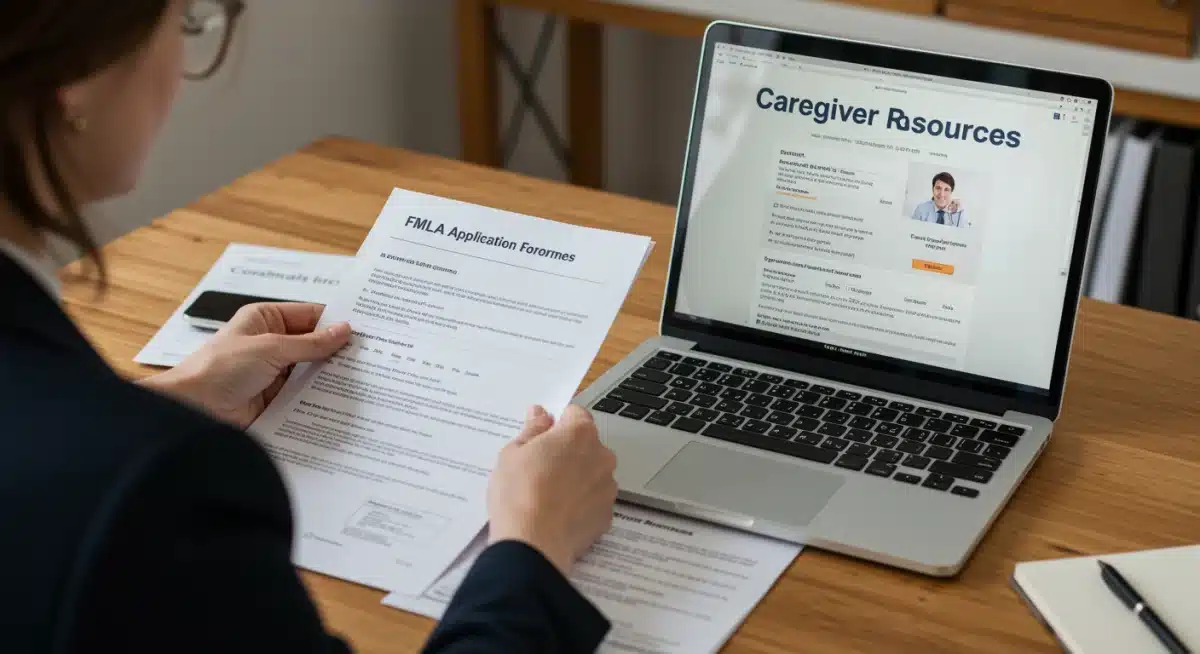
Completing Medical Certification
This is arguably the most critical piece of your FMLA application. Your employer will provide you with a form (often WH-380-F, Certification of Health Care Provider for Family Member’s Serious Health Condition) that needs to be completed by your family member’s healthcare provider. This form verifies the serious health condition and the necessity of your care.
- Ensure the healthcare provider fills out all sections thoroughly and accurately.
- The form should clearly state the start date and expected duration of the condition and the need for your care.
- Return the completed certification to your employer within the timeframe they specify (usually 15 calendar days).
- Keep copies of all submitted documents for your records.
Any missing or incomplete information on the medical certification could delay or even jeopardize your FMLA approval. It’s often helpful to review the form with the healthcare provider to ensure all questions are answered completely and clearly, specifically addressing the need for your caregiving.
The FMLA application process, while detailed, is manageable with careful attention to each step. By providing timely notice and ensuring robust medical certification, caregivers can successfully navigate this process and secure the protected leave they need to support their family members.
Maximizing Your 12 Weeks: Intermittent vs. Continuous Leave
The FMLA provides flexibility in how you can utilize your 12 weeks of leave, offering both continuous and intermittent options. Understanding these distinctions is crucial for caregivers to effectively manage their responsibilities and tailor their leave to their family member’s needs. The choice between these two types of leave significantly impacts your work schedule and caregiving strategy.
Continuous leave is straightforward: you take a block of time off from work. Intermittent leave, however, allows for more flexibility, enabling you to take leave in separate blocks of time, or by reducing your usual weekly or daily work schedule. This adaptability is particularly beneficial for ongoing care needs.
Choosing the Right Leave Type
Your decision between continuous and intermittent leave will largely depend on the nature of your family member’s serious health condition and the type of care they require. Each option presents distinct advantages and considerations.
- Continuous Leave: Best for situations requiring full-time, uninterrupted care, such as post-surgery recovery or end-of-life care. This provides a complete break from work to focus solely on caregiving.
- Intermittent Leave: Ideal for ongoing medical appointments, therapy sessions, or periods of exacerbation for chronic conditions. It allows you to maintain some work presence while still providing necessary care.
- Reduced Schedule Leave: A form of intermittent leave where your work hours are reduced for a period, for example, working part-time instead of full-time to accommodate caregiving duties.
When requesting intermittent or reduced schedule leave, your employer may require you to transfer temporarily to an alternative position with equivalent pay and benefits that better accommodates your recurring periods of leave. This is a legitimate employer right under FMLA, provided the new position is equivalent.
Regardless of the type of leave chosen, clear communication with your employer about your schedule and any changes is paramount. Providing as much advance notice as possible for intermittent leave helps employers manage staffing and workflow. Your medical certification should also clearly support the need for intermittent or reduced schedule leave, detailing the expected frequency and duration of your absences.
By carefully considering the continuous versus intermittent options, caregivers can strategically utilize their 12 weeks of FMLA leave to provide the most effective and supportive care for their family members while managing their professional obligations.
Navigating Employer Communication and Rights During FMLA Leave
Effective communication with your employer is a cornerstone of a successful FMLA leave experience. While FMLA protects your job, it doesn’t eliminate the need for respectful and proactive dialogue. Understanding your rights and responsibilities during your leave ensures a smooth process for both you and your workplace.
From the moment you request leave until your return, maintaining an open line of communication, within FMLA guidelines, is beneficial. This helps prevent misunderstandings and ensures that your employer can appropriately manage your absence.
Your Rights and Employer Responsibilities
FMLA provides significant protections, and knowing these rights empowers you throughout your leave. Your employer also has specific responsibilities they must adhere to under the law.
- Job Protection: Upon your return, you must be restored to your original job or an equivalent job with equivalent pay, benefits, and other terms and conditions of employment.
- Health Benefits: Your employer must maintain your group health benefits during FMLA leave under the same conditions as if you had not taken leave.
- No Retaliation: It is illegal for an employer to interfere with, restrain, or deny the exercise of, or the attempt to exercise, any FMLA right.
- Notice Requirements: Employers must provide various notices, including eligibility, rights and responsibilities, and designation notices.
While on FMLA leave, you are generally not permitted to engage in other employment that is inconsistent with the reason for your leave. For example, if you are taking leave to care for a family member, you should not be working another job. However, if your employer has a policy restricting outside employment, that policy can still apply.
It’s also important to understand that FMLA leave is generally unpaid. However, you may choose, or your employer may require you, to use accrued paid leave (like vacation or sick time) concurrently with FMLA leave. This can help mitigate the financial impact of taking time off.
By being informed about your FMLA rights and understanding your employer’s obligations, you can navigate your leave with confidence. Proactive communication and a clear understanding of the law contribute to a less stressful and more effective caregiving period.
Returning to Work After FMLA: What Caregivers Need to Know
The transition back to work after FMLA leave can sometimes be as challenging as arranging the leave itself. Preparing for your return, understanding your re-employment rights, and communicating effectively with your employer are key to a smooth reintegration into your professional role. This final stage requires careful attention to ensure your FMLA protections are fully realized.
Your return to work is a protected right under FMLA, meaning your employer must reinstate you to your previous position or an equivalent one. However, being proactive in your return planning can ease the transition for both you and your workplace.
Planning Your Return and Reinstatement Rights
As your FMLA leave draws to a close, consider these steps to facilitate your return and ensure your rights are upheld.
- Medical Certification for Return: Your employer may require a fitness-for-duty certification to return to work if you took FMLA leave for your own serious health condition. While not typically required for caregiving leave, it’s good to clarify with your HR department.
- Communication: Reconfirm your return date with your employer in advance. This allows them to prepare for your reintegration and ensures your workspace is ready.
- Equivalent Position: Understand that while your job is protected, it doesn’t mean you’ll necessarily return to the exact same desk or project. An ‘equivalent’ position means substantially similar duties, responsibilities, schedule, and working conditions, with identical pay and benefits.
- Benefit Reinstatement: Ensure all benefits you had prior to your leave, especially health insurance, are fully reinstated without any waiting periods.
It’s crucial to document all communications related to your return, including dates, times, and the content of discussions. If you encounter any issues with your reinstatement, having a clear record will be invaluable. If your employer claims your position is no longer available, they must demonstrate that it was eliminated due to legitimate business reasons and not because of your FMLA leave.
If you have any concerns about your re-employment rights, consulting with an HR professional or an employment law specialist can provide clarity and guidance. The goal is to ensure a seamless return that respects your FMLA protections and allows you to resume your professional life with confidence.
Returning to work after FMLA leave marks the completion of the cycle. By understanding your rights and communicating effectively, caregivers can successfully transition back to their roles, having fulfilled their vital caregiving duties while maintaining their career stability.
| Key Aspect | Brief Description |
|---|---|
| Eligibility | Work for covered employer, 12+ months employment, 1,250+ hours worked, 50+ employees within 75 miles. |
| Serious Condition | Requires inpatient care or continuing treatment by a healthcare provider for family member. |
| Application Steps | Notify employer, submit timely and complete medical certification, maintain communication. |
| Leave Types | Continuous (block of time) or Intermittent (as needed, reduced schedule) leave options available. |
Frequently Asked Questions About FMLA Caregiving Leave
No, FMLA leave for caregiving is specifically for a spouse, child, or parent with a serious health condition. This definition is strict and does not extend to siblings, grandparents, or other relatives, unless they fall under the legal definition of parent or child in your specific circumstances.
FMLA leave is generally unpaid. However, employees may choose, or employers may require, the use of accrued paid leave (such as vacation or sick time) concurrently with FMLA leave. This can help offset the financial impact of taking time off for caregiving responsibilities.
If your FMLA request is denied, first ensure you meet all eligibility requirements and your documentation is complete. If you believe the denial is improper, you can contact your HR department, consult an employment attorney, or file a complaint with the U.S. Department of Labor’s Wage and Hour Division.
Yes, FMLA allows for intermittent leave, meaning you can take leave in separate blocks of time or by reducing your work schedule. This is often used for recurring medical appointments or periods of incapacity related to a chronic condition, as long as it’s medically necessary.
Yes, during FMLA leave, your employer must maintain your group health benefits under the same conditions as if you had not taken leave. You are still responsible for paying your portion of the health insurance premiums, which can be arranged through various payment methods with your employer.
Conclusion
Securing FMLA leave for caregiving in 2025 is a vital process for U.S. caregivers dedicated to supporting their families while maintaining their professional lives. By meticulously understanding eligibility, navigating the application process with thorough documentation, and effectively communicating with employers, caregivers can confidently access up to 12 weeks of protected leave. This guide aims to empower you with the practical solutions needed to make informed decisions, ensuring you can provide essential care without jeopardizing your career. Remember, preparation and clear communication are your strongest allies in this journey.