Deep Breathing Techniques: 7 Quick Practices for Instant Calm in Busy Family Life (2026)
Anúncios
In the whirlwind of 2026 family life, where schedules are packed, digital distractions are constant, and the demands on parents and children alike seem to grow exponentially, finding moments of peace can feel like searching for a needle in a haystack. The modern family unit often operates at a relentless pace, leading to increased stress, anxiety, and a feeling of being perpetually overwhelmed. But what if there was a simple, accessible, and incredibly effective tool at your disposal, one that could bring instant calm and foster a more harmonious home environment?
Anúncios
Enter deep breathing family techniques. Far from being just a trendy wellness fad, deep breathing is a scientifically proven method to activate the body’s relaxation response, reduce stress hormones, improve focus, and enhance overall well-being. And the best part? It’s free, requires no special equipment, and can be practiced anywhere, anytime – even amidst the delightful chaos of family life.
This comprehensive guide will delve into seven quick and powerful deep breathing techniques specifically tailored for busy families in 2026. We’ll explore not only how to perform each technique but also why they are so effective and how you can seamlessly integrate them into your daily routine, transforming moments of stress into opportunities for collective calm. By mastering these simple practices, you’ll equip yourself and your loved ones with invaluable tools to navigate the complexities of life with greater resilience and serenity.
Anúncios
The Science Behind Deep Breathing: Why It Works for Your Family
Before we dive into the practical exercises, let’s briefly understand the powerful physiological mechanisms that make deep breathing family practices so impactful. Our breath is intrinsically linked to our nervous system. When we experience stress, our sympathetic nervous system (the ‘fight or flight’ response) kicks in, leading to shallow, rapid breathing, increased heart rate, and muscle tension. Conversely, deep, diaphragmatic breathing activates the parasympathetic nervous system (the ‘rest and digest’ response).
This activation has a cascade of positive effects:
- Reduces Cortisol Levels: Deep breathing helps lower the production of cortisol, the primary stress hormone, which can have detrimental long-term effects on health.
- Increases Oxygen Flow: More oxygen reaches your brain and body, improving cognitive function, energy levels, and reducing fatigue.
- Calms the Heart Rate: Slow, deep breaths signal to your heart to slow down, promoting a sense of tranquility.
- Enhances Focus and Concentration: By calming the mind, deep breathing helps improve attention span, a crucial benefit for both adults and children.
- Boosts Mood: The practice can stimulate the release of endorphins, natural mood elevators, leading to feelings of happiness and well-being.
- Improves Sleep Quality: By relaxing the body and mind, deep breathing before bedtime can significantly improve sleep patterns for the entire family.
Imagine harnessing these benefits for your family. From tantrum-induced meltdowns to pre-exam jitters, from parental overwhelm to sibling squabbles, deep breathing family techniques offer a readily available solution to bring everyone back to a state of equilibrium.
Technique 1: The 4-7-8 Breath – Your Go-To for Instant Calm
Developed by Dr. Andrew Weil, the 4-7-8 breathing technique is a powerful natural tranquilizer for the nervous system. It’s incredibly simple and effective for adults and can be adapted for older children. This is an excellent technique for moments of acute stress, before sleep, or when you need to quickly ground yourself.
How to Practice the 4-7-8 Breath:
- Position: Sit comfortably with your back straight or lie down. Place the tip of your tongue against the ridge of tissue just behind your upper front teeth, and keep it there throughout the entire breathing process.
- Exhale Completely: Exhale completely through your mouth, making a gentle ‘whoosh’ sound.
- Inhale (4 Counts): Close your mouth and inhale quietly through your nose to a mental count of four.
- Hold Breath (7 Counts): Hold your breath for a count of seven.
- Exhale (8 Counts): Exhale completely through your mouth, making a ‘whoosh’ sound, for a count of eight.
- Repeat: This completes one breath. Inhale again and repeat the cycle three more times for a total of four breaths.
Family Adaptation: For children, you can simplify the counts or turn it into a game. For instance, ‘smell the flower’ (inhale for 4), ‘hold the smell’ (hold for 7), ‘blow out the candle’ (exhale for 8). Encourage them to feel their belly rise and fall. This makes deep breathing family practice engaging and fun.
Technique 2: Box Breathing (Four-Square Breathing) – For Focus and Stress Reduction
Box breathing, also known as four-square breathing, is a simple yet potent technique used by Navy SEALs to maintain calm and focus in high-stress situations. Its rhythmic nature makes it particularly effective for reducing anxiety and improving concentration, making it ideal for both parents facing work deadlines and children needing to focus on homework or calm down after an exciting activity.
How to Practice Box Breathing:
- Position: Sit comfortably, feet flat on the floor, or lie down.
- Exhale Completely: Exhale all the air from your lungs.
- Inhale (4 Counts): Inhale slowly through your nose for a count of four. Feel your belly expand.
- Hold Breath (4 Counts): Hold your breath for a count of four.
- Exhale (4 Counts): Exhale slowly through your mouth for a count of four, emptying your lungs completely.
- Hold Breath (4 Counts): Hold your breath again for a count of four before the next inhale.
- Repeat: Continue this cycle for several minutes, or until you feel a sense of calm.
Family Adaptation: Visualize drawing a square with your breath. Inhale up one side, hold across the top, exhale down the other side, and hold across the bottom. You can even use your finger to trace a square in the air. This visualization makes deep breathing family practice more concrete for younger participants.
Technique 3: Diaphragmatic (Belly) Breathing – The Foundation of Relaxation
Diaphragmatic breathing is the cornerstone of all effective deep breathing techniques. Most people breathe shallowly from their chest, especially when stressed. Belly breathing engages the diaphragm, a powerful muscle located below the lungs, leading to more efficient oxygen exchange and a deeper relaxation response. Teaching your family this fundamental technique will be invaluable.
How to Practice Diaphragmatic Breathing:
- Position: Lie on your back with knees bent and feet flat on the floor, or sit upright in a chair. Place one hand on your chest and the other on your belly, just below your rib cage.
- Inhale: Inhale slowly and deeply through your nose, allowing your belly to rise as your diaphragm contracts and pulls air into your lungs. Your chest hand should remain relatively still.
- Exhale: Exhale slowly through pursed lips, feeling your belly fall. Gently contract your abdominal muscles to push out the last bit of air.
- Focus: Focus on the movement of your belly, making sure it rises and falls with each breath.
- Repeat: Practice for 5-10 minutes, several times a day.
Family Adaptation: Turn it into a ‘belly buddy’ game. Have children lie down and place a small, soft toy (like a teddy bear) on their belly. As they breathe deeply, they can watch their ‘belly buddy’ rise and fall. This makes learning deep breathing family skills interactive and fun.
Technique 4: Pursed-Lip Breathing – For Controlled Exhalation and Airflow
Pursed-lip breathing is a simple technique that helps slow down your breathing, making each breath more effective. It keeps the airways open longer, allowing more air to exit the lungs, which in turn brings in more fresh air with the next inhale. This can be particularly helpful for managing shortness of breath or for calming down quickly.
How to Practice Pursed-Lip Breathing:
- Relax: Relax your neck and shoulder muscles.
- Inhale: Inhale slowly through your nose for two counts, keeping your mouth closed.
- Pucker Lips: Pucker or ‘purse’ your lips as if you’re about to whistle or gently blow out a candle.
- Exhale: Exhale slowly and gently through your pursed lips for a count of four (or at least twice as long as your inhale).
- Repeat: Continue this pattern for several minutes.
Family Adaptation: A great way to teach this is to pretend you’re blowing bubbles or gently blowing out birthday candles. Emphasize the slow, controlled exhale. This is an excellent deep breathing family exercise for winding down before bed.
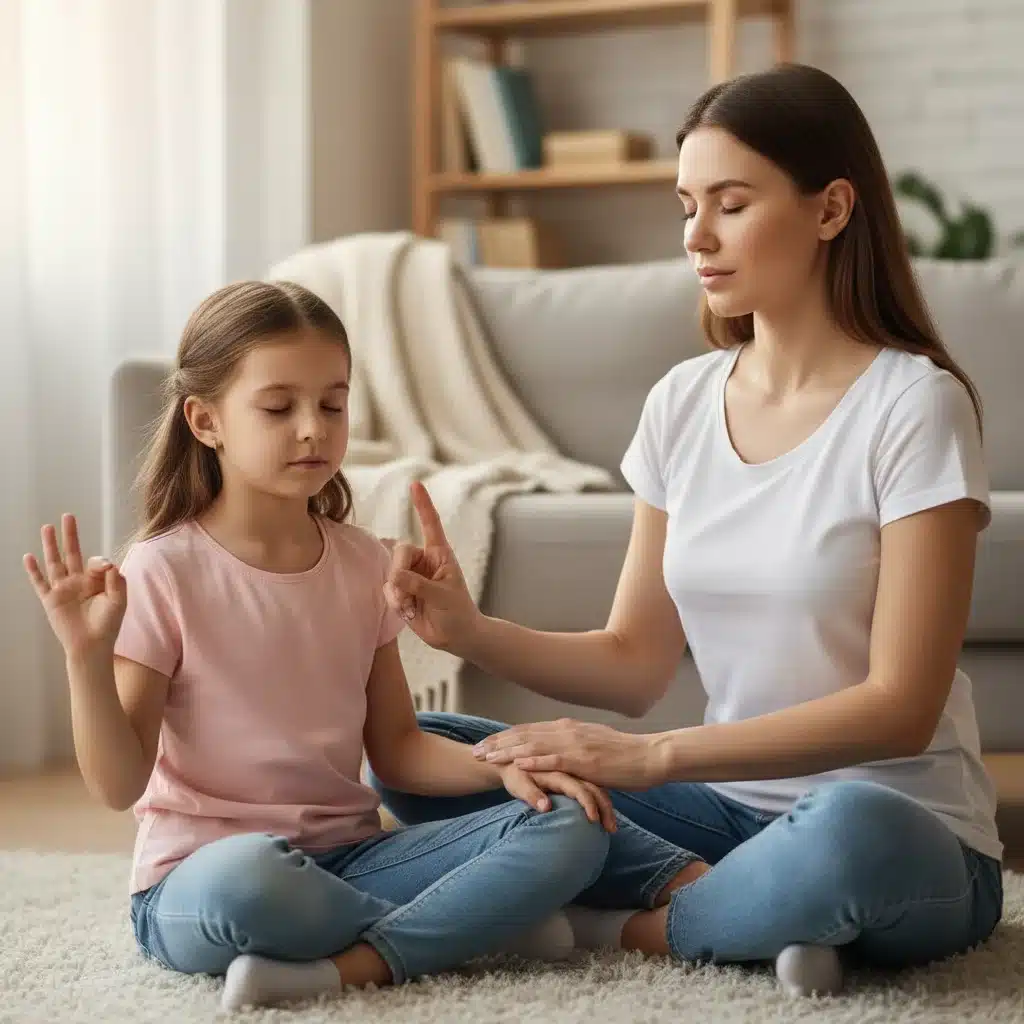
Technique 5: Alternate Nostril Breathing (Nadi Shodhana) – Balancing Energy
Originating from ancient yogic practices, alternate nostril breathing is known for its ability to calm the nervous system, balance the left and right hemispheres of the brain, and clear energy channels. While it might sound complex, it’s quite easy to learn and incredibly effective for reducing anxiety and promoting mental clarity. This is often better suited for older children and adults due to the coordination required.
How to Practice Alternate Nostril Breathing:
- Position: Sit in a comfortable meditative posture, with your spine straight.
- Hand Position: Bring your right hand up to your nose. Rest your index and middle fingers gently between your eyebrows (or fold them down into your palm). Your thumb will be used to close your right nostril, and your ring finger and pinky finger will close your left nostril.
- Exhale: Close your right nostril with your thumb and exhale completely through your left nostril.
- Inhale (Left): Inhale slowly and deeply through your left nostril.
- Switch: Close your left nostril with your ring finger. Release your thumb from your right nostril.
- Exhale (Right): Exhale slowly and completely through your right nostril.
- Inhale (Right): Inhale slowly and deeply through your right nostril.
- Switch: Close your right nostril with your thumb. Release your ring finger from your left nostril.
- Exhale (Left): Exhale slowly and completely through your left nostril.
- Repeat: Continue this alternating pattern for 5-10 rounds.
Family Adaptation: For children, you can simplify by just having them gently block one nostril at a time with a finger, focusing on the sensation of air moving in and out of the open nostril. Make it a game of ‘one-sided breathing’ before introducing the full alternation. This makes deep breathing family practice adaptable for different ages.
Technique 6: Lion’s Breath (Simhasana) – Releasing Tension and Playfulness
Lion’s Breath is a dynamic and expressive breathing technique that’s fantastic for releasing pent-up tension, frustration, and even anger. It’s also incredibly playful, making it a great option for children who need to let off steam in a constructive way. This is a perfect deep breathing family exercise for moments of collective frustration or just for fun.
How to Practice Lion’s Breath:
- Position: Kneel on the floor, crossing your ankles (or sit in a comfortable cross-legged position). Place your hands on your knees, fingers spread wide as if they are claws.
- Inhale: Inhale deeply through your nose.
- Exhale (Roar!): Open your mouth wide, stick out your tongue, and exhale forcefully with a powerful ‘HAAAA’ sound, as if you’re a roaring lion. Keep your gaze fixed on your third eye (the space between your eyebrows) or the tip of your nose.
- Repeat: Repeat this 3-5 times, allowing yourself to fully express and release tension with each roar.
Family Adaptation: This technique is inherently child-friendly! Encourage exaggerated roars and silly faces. It’s a wonderful way to teach children that it’s okay to express strong emotions in a safe and controlled manner. Make it a regular ‘roar out loud’ session for deep breathing family fun.

Technique 7: Humming Bee Breath (Bhramari Pranayama) – Soothing and Calming
Humming Bee Breath is a wonderfully soothing and calming technique that involves making a gentle humming sound during exhalation. The vibrations created by the hum have a profound calming effect on the nervous system, making it excellent for reducing anxiety, alleviating headaches, and promoting a sense of inner peace. It’s also great for children as the humming can be quite engaging.
How to Practice Humming Bee Breath:
- Position: Sit comfortably with your spine straight.
- Close Ears (Optional): Gently close your ears with your index fingers or thumbs (this amplifies the internal sound).
- Inhale: Inhale deeply through your nose.
- Exhale (Hum): As you exhale, keep your mouth closed and make a steady, low-pitched humming sound (like a bee buzzing). Feel the vibrations in your head and chest.
- Repeat: Continue for 5-7 rounds, allowing the sound and vibrations to soothe you.
Family Adaptation: Encourage children to make their best ‘bee sound.’ You can even make it a game to see who can make the longest, smoothest hum. This makes deep breathing family relaxation a playful and sensory experience.
Integrating Deep Breathing into Your 2026 Family Life
The key to making these techniques effective is consistent practice and thoughtful integration into your daily routine. Here are some tips for making deep breathing family practices a natural part of your home life:
- Morning Ritual: Start the day with a few minutes of box breathing or diaphragmatic breathing to set a calm tone.
- Transition Times: Use 4-7-8 breathing before school/work, after school, or before bedtime to help everyone transition smoothly between activities.
- Homework Helper: A quick round of box breathing can help children focus before tackling homework or calm nerves before a test.
- Conflict Resolution: When tensions rise, suggest a ‘breathing break’ for everyone. Even a few rounds of pursed-lip breathing can de-escalate a situation.
- Bedtime Routine: Humming bee breath or 4-7-8 breathing are excellent for winding down and improving sleep quality.
- Designate a ‘Calm Corner’: Create a special space in your home where family members can go to practice breathing or simply relax when feeling overwhelmed.
- Lead by Example: Children are keen observers. When they see you using these techniques to manage your own stress, they are more likely to adopt them.
- Keep it Fun and Playful: Especially for younger children, frame breathing exercises as games or special ‘superpower’ breaths.
- Short and Sweet: You don’t need long sessions. Even 1-2 minutes of focused breathing can make a significant difference.
- Consistency Over Perfection: Don’t worry about doing it perfectly every time. The goal is regular practice.
Benefits Beyond Immediate Calm for the Deep Breathing Family
The advantages of incorporating deep breathing family techniques extend far beyond immediate stress reduction. Over time, regular practice can lead to a multitude of profound benefits for every family member:
For Parents:
- Enhanced Patience: A calmer nervous system means a greater capacity for patience, especially during challenging parenting moments.
- Improved Decision-Making: Reduced stress allows for clearer thinking and more thoughtful responses, rather than reactive ones.
- Better Emotional Regulation: The ability to manage your own emotions more effectively, setting a positive example for your children.
- Increased Energy: More efficient oxygen intake can lead to sustained energy levels throughout the day.
- Stronger Relationships: A more relaxed and present parent can foster deeper connections with their children and partner.
- Reduced Parental Burnout: Regular self-care through breathing helps prevent the exhaustion and cynicism often associated with parenting stress.
For Children:
- Improved Emotional Intelligence: Children learn to identify and respond to their emotions in a healthy way.
- Better Academic Performance: Enhanced focus and reduced anxiety can lead to improved concentration in school.
- Increased Self-Regulation: They gain tools to calm themselves down when feeling overwhelmed, angry, or anxious.
- Reduced Tantrums and Meltdowns: By learning to regulate their nervous system, children can prevent or shorten emotional outbursts.
- Greater Resilience: They develop coping mechanisms for life’s inevitable challenges.
- Better Sleep: Calming techniques before bed can lead to falling asleep faster and having more restful sleep.
For the Family Unit:
- More Harmonious Environment: A family where everyone has tools for calm creates a more peaceful and supportive home.
- Stronger Bonds: Practicing together can be a bonding activity, creating shared moments of peace and connection.
- Collective Resilience: A family that breathes together can better navigate stress and challenges as a unit.
- Open Communication: When everyone is calmer, it’s easier to communicate openly and resolve conflicts constructively.
Overcoming Challenges and Staying Motivated
It’s natural to encounter challenges when introducing new habits, especially with busy family schedules. Here’s how to overcome common hurdles and keep your deep breathing family journey on track:
- Resistance from Children: If children resist, don’t force it. Make it playful, short, and voluntary. Use stories or analogies (e.g., ‘balloon breath,’ ‘snake breath’). Start with just one technique they enjoy.
- Lack of Time: Remember, even 60 seconds counts! Integrate breathing into existing routines: waiting for dinner, during a car ride, before reading a bedtime story.
- Forgetting to Practice: Set gentle reminders on your phone, or create visual cues around the house (e.g., a small drawing of a breath cloud).
- Feeling Self-Conscious: It might feel strange at first, but remember the benefits. Practice when you’re alone first if it helps, then gradually introduce it to the family.
- Expecting Instant Perfection: Like any skill, breathing takes practice. Celebrate small wins and acknowledge that some days will be better than others.
- Making it a Chore: If it starts to feel like another item on the to-do list, step back and re-evaluate. Reintroduce the fun element, or try a different technique.
Remember, the goal is not to eliminate all stress, but to provide your family with effective tools to manage it. By embracing deep breathing family practices, you’re investing in the long-term emotional well-being and resilience of everyone under your roof.
Conclusion: Breathe Your Way to a Calmer 2026 Family Life
In the vibrant and often demanding landscape of 2026 family life, the ability to find and cultivate inner calm is more valuable than ever. These seven quick deep breathing techniques offer a powerful, accessible, and free pathway to reducing stress, improving focus, and fostering a more peaceful and connected home environment. From the instant tranquility of the 4-7-8 breath to the playful release of Lion’s Breath, there’s a technique for every mood and every family member.
By making deep breathing family practices a regular part of your daily rhythm, you are not just teaching your children to breathe; you are teaching them invaluable life skills in emotional regulation, self-awareness, and resilience. You are creating a legacy of calm, equipping them to navigate the challenges of their world with greater grace and inner strength.
So, take a deep breath. Encourage your family to do the same. Experience the transformative power that lies within each conscious inhale and exhale. The journey to a calmer, more harmonious family life begins with a single breath – and with these simple, effective techniques, you’re well on your way to a more peaceful 2026 and beyond.