Micro-Breaks: Boost Working Parent Productivity & Reduce Stress

New research in 2025 indicates that integrating strategic micro-breaks throughout the workday significantly boosts productivity and reduces stress for working parents, fostering a healthier work-life balance and improved well-being.
Are you a working parent constantly juggling deadlines, childcare, and personal well-being? A groundbreaking study from 2025 reveals how
The Science Behind Micro-Breaks for Working Parents
The concept of micro-breaks isn’t new, but recent research specifically focusing on working parents in 2025 has unveiled profound insights into their unique benefits. These brief respites, often lasting just a few minutes, are proving to be powerful tools for cognitive restoration and emotional regulation, particularly for those balancing demanding careers with family responsibilities.
Traditional work models often emphasize long stretches of uninterrupted work, but this approach can be counterproductive, especially for parents whose attention is frequently divided. The new studies suggest that short, intentional breaks can reset mental fatigue and improve overall focus, making subsequent work periods more effective. This is crucial for parents who might face unexpected interruptions throughout their day.
Understanding the Physiological Impact
- Cognitive Restoration: Micro-breaks allow the brain to switch tasks, preventing cognitive overload and improving memory retention.
- Reduced Eye Strain: Stepping away from screens for even a minute can alleviate digital eye strain, a common complaint among remote working parents.
- Improved Circulation: Brief movement breaks can enhance blood flow, reducing discomfort from prolonged sitting and boosting energy levels.
In essence, these small pauses act as mental refreshers, enabling working parents to return to tasks with renewed vigor and clarity. This physiological reset is fundamental to sustaining high levels of productivity without succumbing to burnout, a common challenge for this demographic.
Defining Effective Micro-Breaks in 2025
Not all breaks are created equal. The 2025 research highlights that the effectiveness of micro-breaks for working parents lies in their intentionality and content. Simply scrolling through social media, while a break, might not offer the same restorative benefits as more deliberate activities. The key is to engage in activities that genuinely disengage your mind from work-related stressors.
For working parents, integrating these breaks requires creativity and flexibility. Given the unpredictable nature of family life, micro-breaks might need to be spontaneous rather than rigidly scheduled. The goal is to find small moments throughout the day that provide a genuine mental and physical reset, even if they are brief.
Examples of High-Impact Micro-Breaks
- Mindful Breathing: A 2-minute session of deep breathing can calm the nervous system and enhance focus.
- Quick Stretch or Walk: Standing up, stretching, or a brief walk around the house can alleviate physical tension.
- Hydration Pause: Taking a moment to consciously drink a glass of water can be a subtle but effective break.
- Brief Interaction with Child: A quick hug or a few words with a child can provide emotional connection and a mental shift.
The beauty of micro-breaks is their adaptability. They don’t require significant time commitment, making them feasible even on the busiest days. The research emphasizes that consistency, even with very short breaks, yields cumulative positive effects over time.
Boosting Productivity with Strategic Pauses
One of the most compelling findings from the 2025 research is the direct correlation between micro-breaks and enhanced productivity among working parents. Far from being a distraction, these short pauses act as catalysts for sustained focus and improved output. The study indicates that parents who regularly incorporate micro-breaks experience fewer errors and higher quality work.
The mechanism behind this productivity boost is rooted in preventing decision fatigue and maintaining cognitive resources. When working parents are constantly switching between professional and parental duties, their mental energy can quickly deplete. Micro-breaks provide the necessary intervals to recharge these resources, ensuring they can approach each task with a fresh perspective.
Consider the typical workday of a working parent: an early start, navigating school drop-offs or virtual learning, diving into work, managing household tasks, and then returning to work. Without intentional breaks, this relentless cycle can lead to diminished returns. The research suggests that even a 5-minute break every hour or two can make a significant difference in maintaining peak performance throughout the day.
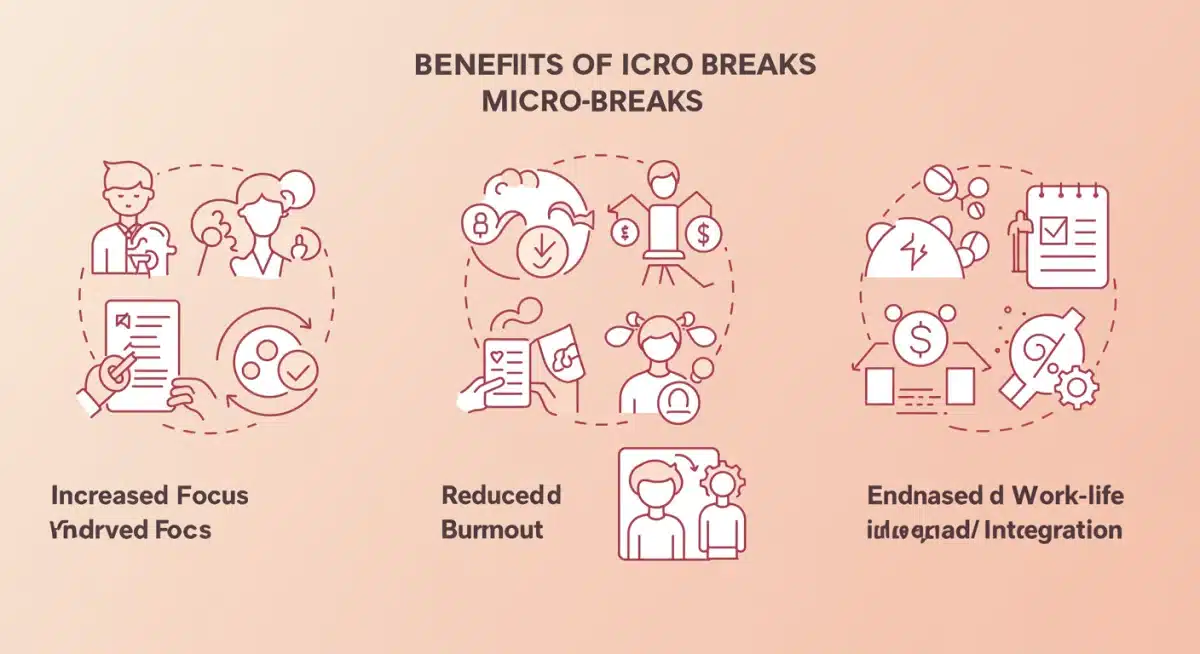
Furthermore, micro-breaks contribute to better time management. By intentionally scheduling or taking these short pauses, parents become more aware of their work patterns and can better allocate their energy. This structured approach, even if flexible, helps in avoiding the pitfalls of procrastination and last-minute rushes.
In conclusion, incorporating strategic micro-breaks isn’t about working less; it’s about working smarter. For working parents, this translates into more efficient work periods, leading to higher quality output and a greater sense of accomplishment, without the cost of burnout.
Reducing Stress and Preventing Burnout
Beyond productivity, the 2025 research offers significant insights into how micro-breaks are vital for mitigating stress and preventing burnout in working parents. The demands placed on this demographic are often immense, leading to chronic stress that can impact both physical and mental health. Micro-breaks serve as critical buffers against these pressures.
Stress reduction through micro-breaks is multifaceted. Physically, these breaks can release accumulated tension from prolonged sitting or intense focus. Mentally, they provide a much-needed detachment from stressors, allowing for emotional processing and a calmer state of mind. This is particularly important for parents who may be experiencing guilt or anxiety related to balancing their roles.
The Link to Mental Well-being
- Emotional Regulation: Short breaks can help in managing frustrating moments or overwhelming tasks, preventing emotional outbursts.
- Improved Mood: Engaging in pleasant, brief activities can elevate mood and foster a more positive outlook on work and life.
- Enhanced Self-Compassion: Taking breaks signals self-care, which is crucial for overall mental health and resilience.
The study highlights that working parents who consistently take micro-breaks report lower levels of perceived stress and higher levels of job satisfaction. This suggests that these small interventions have a profound impact on their overall well-being, allowing them to better cope with the unique challenges they face.
By consciously integrating micro-breaks, working parents can create a rhythm that supports their mental health, preventing the insidious creep of burnout. These moments of pause are not luxuries; they are essential components of a sustainable and healthy work-life integration.
Practical Strategies for Integrating Micro-Breaks
Implementing micro-breaks effectively requires practical strategies tailored to the realities of a working parent’s life. The 2025 research offers several actionable tips for seamlessly weaving these restorative pauses into demanding schedules. The key is to identify opportunities and create routines that are flexible enough to accommodate unexpected shifts.
One primary strategy involves setting gentle reminders. These can be digital alerts or simple visual cues that prompt you to take a break. The goal is to make break-taking an automatic habit rather than an afterthought. For instance, after completing a major task or attending a long meeting, consider that your natural cue for a quick pause.
Tips for Seamless Integration
- Scheduled Mini-Pauses: Block out 5-10 minutes every couple of hours in your calendar for a dedicated micro-break.
- Activity Stacking: Combine a micro-break with another necessary activity, like getting a glass of water while stretching.
- Transition Breaks: Use the time between finishing one task and starting another for a brief mental reset.
- Involve Family (if possible): A quick game or story with a child can be a refreshing micro-break that also strengthens family bonds.
It’s also important to communicate your need for these breaks, especially if working from home. Let your family know that these short periods are for your well-being, which ultimately benefits everyone. The research emphasizes that consistency and personalizing these strategies are crucial for long-term success.
Ultimately, integrating micro-breaks is about creating a more mindful approach to work and parenting. By being intentional about these small pauses, working parents can cultivate a more balanced and less stressful daily experience, leading to sustained productivity and improved quality of life.
The Future of Work-Life Balance for Parents in 2025
The 2025 research on micro-breaks for working parents signals a significant shift in understanding and supporting work-life balance. As remote and hybrid work models continue to evolve, the distinction between professional and personal life often blurs, making intentional strategies for well-being more critical than ever. This study provides a clear pathway for parents to navigate these complexities more effectively.
The findings suggest that employers also have a role to play in fostering a culture that encourages micro-breaks. Recognizing the benefits of these short pauses for employee well-being and productivity can lead to more supportive workplace policies. This could include promoting flexible schedules or providing resources that help parents integrate breaks into their day without fear of judgment.
Moreover, the emphasis on micro-breaks aligns with a broader trend towards holistic well-being in the workplace. Companies are increasingly understanding that a healthy, less stressed workforce is a more productive and engaged workforce. For working parents, this means acknowledging their unique challenges and offering practical solutions that fit their multifaceted lives.
As we move further into 2025, the insights from this research will likely influence how organizations design work environments and how individuals manage their daily routines. The simple act of taking a few minutes to pause can have profound, long-lasting effects on both individual capacity and organizational success. It empowers working parents to not just survive, but truly thrive, in their demanding roles.
This evolving understanding of work-life balance, championed by the micro-break research, promises a future where parents can achieve professional excellence without sacrificing their personal well-being or family connections.
| Key Aspect | Description for Working Parents |
|---|---|
| Productivity Boost | Short, intentional breaks enhance focus, reduce errors, and maintain cognitive energy for sustained work quality. |
| Stress Reduction | Micro-breaks mitigate chronic stress, prevent burnout, and support emotional regulation amidst dual demands. |
| Enhanced Well-being | These pauses contribute to better mental health, improved mood, and a greater sense of work-life balance. |
| Practical Integration | Simple strategies like mindful breathing, quick stretches, or brief family interactions make breaks feasible daily. |
Frequently Asked Questions About Micro-Breaks
A micro-break is a short, intentional pause from work, typically lasting between 1 to 10 minutes. Its purpose is to provide a brief mental and physical reset, preventing fatigue and maintaining focus. The ideal duration depends on the activity and individual needs, but even 2-3 minutes can be highly effective for working parents.
For working parents, micro-breaks help manage the unique demands of balancing career and family. They reduce cognitive overload from constant task-switching, alleviate stress, and prevent burnout. These short pauses allow parents to recharge, improving their presence and effectiveness in both their professional and parental roles without significant time commitment.
Effective micro-break activities at home include mindful breathing exercises, quick stretches, stepping away from the screen to look out a window, consciously drinking water, or a very brief, playful interaction with a child. The key is to disengage from work tasks and engage in something restorative, even for a moment.
Yes, new research in 2025 confirms that micro-breaks significantly boost productivity. By allowing your brain to rest and reset, these pauses prevent mental fatigue, enhance focus, and improve decision-making. This leads to higher quality work, fewer errors, and sustained energy levels throughout the workday, making subsequent work periods more efficient.
The optimal frequency varies, but research suggests taking a micro-break every 60-90 minutes is highly beneficial. For working parents, this might mean adapting to natural pauses in their day or intentionally scheduling 2-5 minute breaks. Consistency is more important than strict adherence to a schedule, so find a rhythm that works for your unique situation.
Conclusion
The 2025 research unequivocally highlights the transformative power of micro-breaks for working parents. These brief, intentional pauses are not merely luxuries but essential tools for enhancing productivity, significantly reducing stress, and fostering a healthier work-life balance. By integrating simple, strategic breaks throughout the day, parents can recharge their cognitive and emotional resources, leading to improved well-being and more fulfilling engagement in both their professional and family lives. Embracing micro-breaks is a proactive step towards a more sustainable and balanced future for working parents everywhere, aligning perfectly with the evolving demands of modern life.