
Navigating the intricate landscape of healthcare can be a daunting task, particularly when you are a caregiver responsible for the well-being of a loved one. The United States healthcare system, with its ever-evolving regulations and updates, demands constant attention and understanding. As we look towards 2026, significant 2026 Medicare changes are on the horizon, changes that will undoubtedly impact beneficiaries and, by extension, their dedicated caregivers. For those in the US, staying informed is not just beneficial; it is absolutely crucial for maximizing benefits and ensuring the best possible care for your family members.
This comprehensive guide is designed specifically for caregivers, offering an in-depth look at what to expect from the 2026 Medicare changes. We will break down the complexities, highlight key adjustments, and provide actionable insights to help you prepare effectively. From understanding new coverage options to navigating enrollment periods and financial considerations, our goal is to empower you with the knowledge needed to advocate confidently for your loved ones.
Anúncios
Understanding the Foundation: Medicare Basics for Caregivers
Before delving into the specifics of the 2026 Medicare changes, it’s essential to have a solid grasp of Medicare’s foundational structure. Medicare is a federal health insurance program for people 65 or older, certain younger people with disabilities, and people with End-Stage Renal Disease (permanent kidney failure requiring dialysis or a transplant). It is divided into several parts, each covering different services:
Anúncios
- Medicare Part A (Hospital Insurance): Covers inpatient hospital stays, care in a skilled nursing facility, hospice care, and some home health care.
- Medicare Part B (Medical Insurance): Covers certain doctors’ services, outpatient care, medical supplies, and preventive services.
- Medicare Part C (Medicare Advantage Plans): A type of Medicare health plan offered by private companies that contract with Medicare to provide you with all your Part A and Part B benefits. Medicare Advantage Plans may offer extra benefits that Original Medicare doesn’t cover, like vision, hearing, and dental services.
- Medicare Part D (Prescription Drug Coverage): Helps cover the cost of prescription drugs.
As a caregiver, understanding which parts your loved one is enrolled in, and what each part covers, is the first step toward effectively managing their healthcare. The 2026 Medicare changes will build upon this existing framework, introducing modifications that could affect coverage, costs, and access to care.
Anticipated Key 2026 Medicare Changes: What Caregivers Need to Know
While specific legislative details are still being finalized, general trends and proposed policies allow us to anticipate several significant 2026 Medicare changes. These changes are often driven by efforts to improve affordability, expand access to care, and adapt to the evolving healthcare landscape. Here are some of the areas where caregivers should expect to see updates:
1. Prescription Drug Costs and Coverage
One of the most impactful areas of change for many beneficiaries and their caregivers often revolves around prescription drug costs. Recent legislation has aimed to lower out-of-pocket spending on prescription drugs, and these efforts are expected to continue and mature by 2026. Caregivers should anticipate:
- Continued Caps on Out-of-Pocket Spending: The Inflation Reduction Act (IRA) of 2022 introduced a cap on out-of-pocket prescription drug costs for Medicare Part D beneficiaries, which is being phased in. By 2026, beneficiaries are expected to benefit from further reductions or stabilization of these caps, potentially leading to significant savings for those with high prescription drug expenses.
- Negotiation of Drug Prices: Medicare’s ability to negotiate drug prices for certain high-cost medications is a game-changer. As more drugs become subject to negotiation, caregivers might see lower prices for commonly used medications, easing the financial burden on families.
- Expanded Low-Income Subsidies: Eligibility for programs that help with Part D costs (Extra Help) may be expanded or streamlined, providing more financial assistance to eligible beneficiaries.
2. Expansion of Covered Services
Medicare is continually evaluating new treatments and services for inclusion. The 2026 Medicare changes could bring expanded coverage in several key areas:
- Mental Health Services: There is a growing recognition of the importance of mental health. Caregivers might see enhanced coverage for mental health screenings, therapy, and integrated behavioral health services, making it easier for loved ones to access necessary psychological support.
- Home Health and Telehealth: The pandemic accelerated the adoption of telehealth services. While some flexibilities were temporary, many are expected to become permanent. Caregivers could benefit from continued or expanded coverage for telehealth visits, remote monitoring, and home-based care services, which can be particularly helpful for managing chronic conditions and reducing the need for facility-based care.
- Preventive Care Enhancements: Medicare regularly updates its preventive services. Expect potential additions or improvements to screenings, vaccinations, and wellness programs aimed at keeping beneficiaries healthier and reducing the incidence of serious illness.
3. Medicare Advantage Plan Updates
Medicare Advantage (Part C) plans are offered by private insurance companies and often include extra benefits not covered by Original Medicare. The 2026 Medicare changes will likely influence these plans significantly:
- Benefit Innovations: Medicare Advantage plans are competitive. Caregivers should look for innovative benefits such as expanded dental, vision, and hearing coverage, transportation to medical appointments, and even healthy food allowances. These added benefits can significantly reduce out-of-pocket costs and improve quality of life.
- Provider Networks: Changes in provider networks are common with Medicare Advantage plans. Caregivers should always review their loved one’s plan annually to ensure their preferred doctors and specialists remain in-network.
- Special Needs Plans (SNPs): For beneficiaries with specific chronic conditions or those who are dually eligible for Medicare and Medicaid, Special Needs Plans may see enhancements, offering tailored benefits and care coordination that can be incredibly valuable for complex care needs.

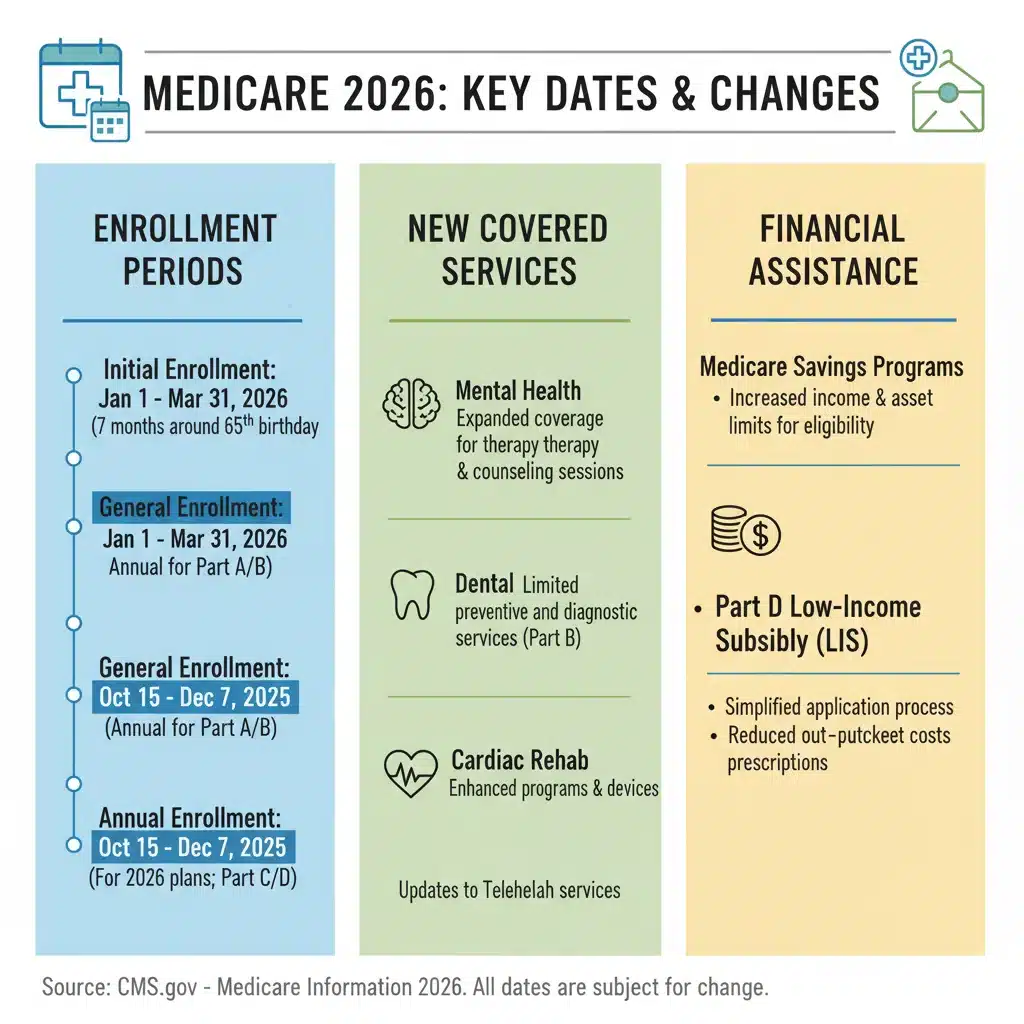
Navigating Enrollment Periods and Eligibility
Understanding when and how to enroll or make changes to Medicare plans is paramount for caregivers. The 2026 Medicare changes won’t alter the fundamental enrollment periods, but knowing these dates is crucial to taking advantage of any new benefits or adjusting coverage.
- Initial Enrollment Period (IEP): This is when your loved one first becomes eligible for Medicare. It begins three months before their 65th birthday, includes their birthday month, and extends three months after – a total of seven months.
- General Enrollment Period (GEP): If your loved one missed their IEP and doesn’t qualify for a Special Enrollment Period, they can enroll during the GEP, which runs from January 1 to March 31 each year. Coverage starts July 1, and late enrollment penalties may apply.
- Annual Enrollment Period (AEP): From October 15 to December 7 each year, anyone with Medicare can make changes to their Medicare health and prescription drug coverage. This is a critical time for caregivers to review existing plans in light of the 2026 Medicare changes and compare them with new options.
- Special Enrollment Periods (SEPs): Certain life events, such as moving, losing other health coverage, or qualifying for Extra Help, can trigger an SEP, allowing changes outside of the standard enrollment periods.
Caregivers should mark these dates on their calendars and proactively review their loved one’s coverage. The AEP, in particular, will be essential for adjusting to the 2026 Medicare changes. Utilize the Medicare Plan Finder tool on Medicare.gov to compare plans based on cost, coverage, and provider networks.
Financial Considerations: Costs and Assistance Programs
The financial aspect of healthcare is a major concern for many caregivers. The 2026 Medicare changes may introduce new cost structures or expand financial assistance programs. Here’s what to keep in mind:
- Premiums, Deductibles, and Coinsurance: These costs are subject to annual adjustments. While specific figures for 2026 are not yet available, caregivers should be prepared for potential increases or decreases in these amounts, which directly affect out-of-pocket expenses.
- Medicare Savings Programs (MSPs): These state-run programs help low-income individuals pay for Medicare Part A and/or Part B premiums, deductibles, and coinsurance. Eligibility thresholds may be updated, potentially allowing more beneficiaries to qualify. Caregivers should investigate if their loved ones qualify for these vital programs.
- Extra Help (Low-Income Subsidy for Part D): As mentioned earlier, the 2026 Medicare changes are expected to enhance or expand eligibility for Extra Help, which assists with Part D prescription drug costs. This can significantly reduce the financial burden of medications.
- Medigap (Medicare Supplement Insurance): Medigap policies help cover out-of-pocket costs not paid by Original Medicare, such as deductibles, copayments, and coinsurance. While Medigap plans are standardized, the premiums can vary. Caregivers should reassess if their loved one’s Medigap plan still meets their needs in conjunction with the 2026 changes.
The Caregiver’s Role: Advocacy and Preparation
As a caregiver, your role in navigating the 2026 Medicare changes is indispensable. You are often the primary advocate for your loved one, and your preparation can make a significant difference in their access to quality, affordable care. Here are practical steps you can take:
- Stay Informed: Regularly check official Medicare resources (Medicare.gov), reputable healthcare news outlets, and this blog for updates. Subscribe to newsletters from organizations like the Centers for Medicare & Medicaid Services (CMS).
- Organize Documentation: Keep all Medicare-related documents organized. This includes Explanation of Benefits (EOBs), plan summaries, and contact information for their plan provider.
- Review Health Needs Annually: Assess your loved one’s health status and anticipated medical needs. Do they have new diagnoses? Are they taking new medications? This information is crucial when comparing plans.
- Seek Expert Advice: Don’t hesitate to consult with State Health Insurance Assistance Programs (SHIPs), independent insurance brokers specializing in Medicare, or trusted financial advisors. These professionals can offer personalized guidance.
- Communicate with Your Loved One: Ensure your loved one is involved in decisions about their healthcare, to the extent they are able. Discuss changes and options openly.
- Utilize Online Tools: The Medicare Plan Finder tool is invaluable for comparing plans. Practice using it to become familiar with its features.
Potential Impact on Specific Caregiver Scenarios
The 2026 Medicare changes will have varying impacts depending on your loved one’s specific situation. Let’s consider a few scenarios:
Caregivers for Individuals with Chronic Conditions
For those caring for individuals with chronic illnesses, the 2026 Medicare changes could bring relief through improved drug coverage and expanded access to specialized care. If mental health coverage is enhanced, this could also support the emotional well-being of both the beneficiary and the caregiver. Pay close attention to changes in Special Needs Plans (SNPs) designed for specific chronic conditions.
Caregivers for Low-Income Beneficiaries
If your loved one has limited income, the anticipated enhancements to financial assistance programs like Extra Help and Medicare Savings Programs are critical. These programs can significantly reduce the financial burden of premiums, deductibles, and prescription costs, freeing up resources for other essential needs.
Caregivers in Rural Areas
Expanded telehealth options within the 2026 Medicare changes could be particularly beneficial for caregivers in rural areas, where access to specialists may be limited. Telehealth can reduce travel time and costs, making healthcare more accessible and convenient.
Looking Beyond 2026: The Future of Medicare
While our immediate focus is on the 2026 Medicare changes, it’s important to recognize that Medicare is a dynamic program. Future legislative efforts will continue to shape its benefits, costs, and structure. Caregivers should adopt a proactive mindset, understanding that continuous engagement and learning are part of effectively managing healthcare for their loved ones.
Advocacy for caregivers and beneficiaries plays a crucial role in future Medicare reforms. Organizations and individuals can contribute to the dialogue by sharing their experiences and perspectives with policymakers. Your insights as a caregiver are invaluable in shaping a Medicare system that truly meets the needs of its beneficiaries.
Conclusion: Empowering Caregivers Through Knowledge
The 2026 Medicare changes represent another step in the ongoing evolution of healthcare in the United States. For caregivers, these updates are not merely policy adjustments; they are changes that directly impact the health, financial stability, and quality of life for their loved ones. By staying informed, understanding the nuances of the upcoming changes, and proactively planning, caregivers can continue to provide the best possible support.
Remember, you are not alone in this journey. Utilize available resources, seek expert advice, and connect with other caregivers. Your dedication and informed decision-making are the most powerful tools in navigating the complexities of Medicare. By preparing for the 2026 Medicare changes now, you can ensure your loved ones continue to receive the comprehensive, high-quality care they deserve.
Stay tuned for more updates as 2026 approaches, and remember that informed action is the best defense against uncertainty in healthcare.